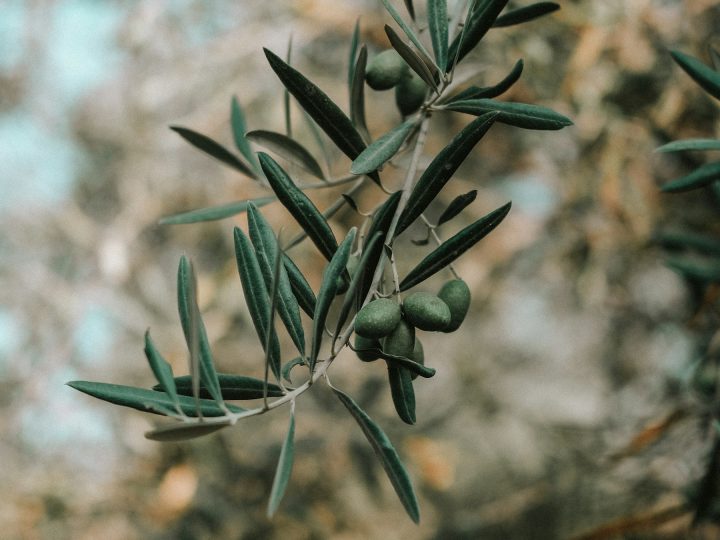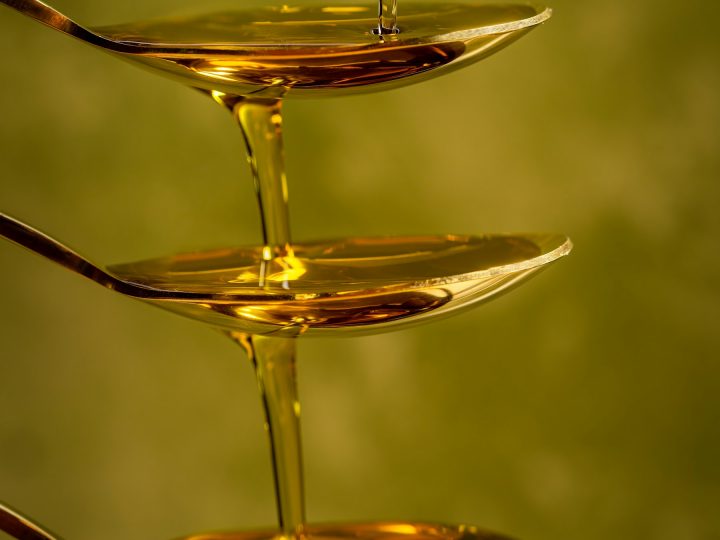
Every bottle of olive oil is the result of a short but careful journey. The quality of the final oil depends largely on what happens in the hours between picking the olives and pressing them.
Key takeaways
- In the Aegean region, the harvest generally runs from autumn into winter.
- Early-harvest olives give greener, more intense oil but lower yields.
- Mills should process olives as soon as possible after picking.
- Modern mills extract oil mechanically, with temperature control.
1. Choosing the moment to harvest
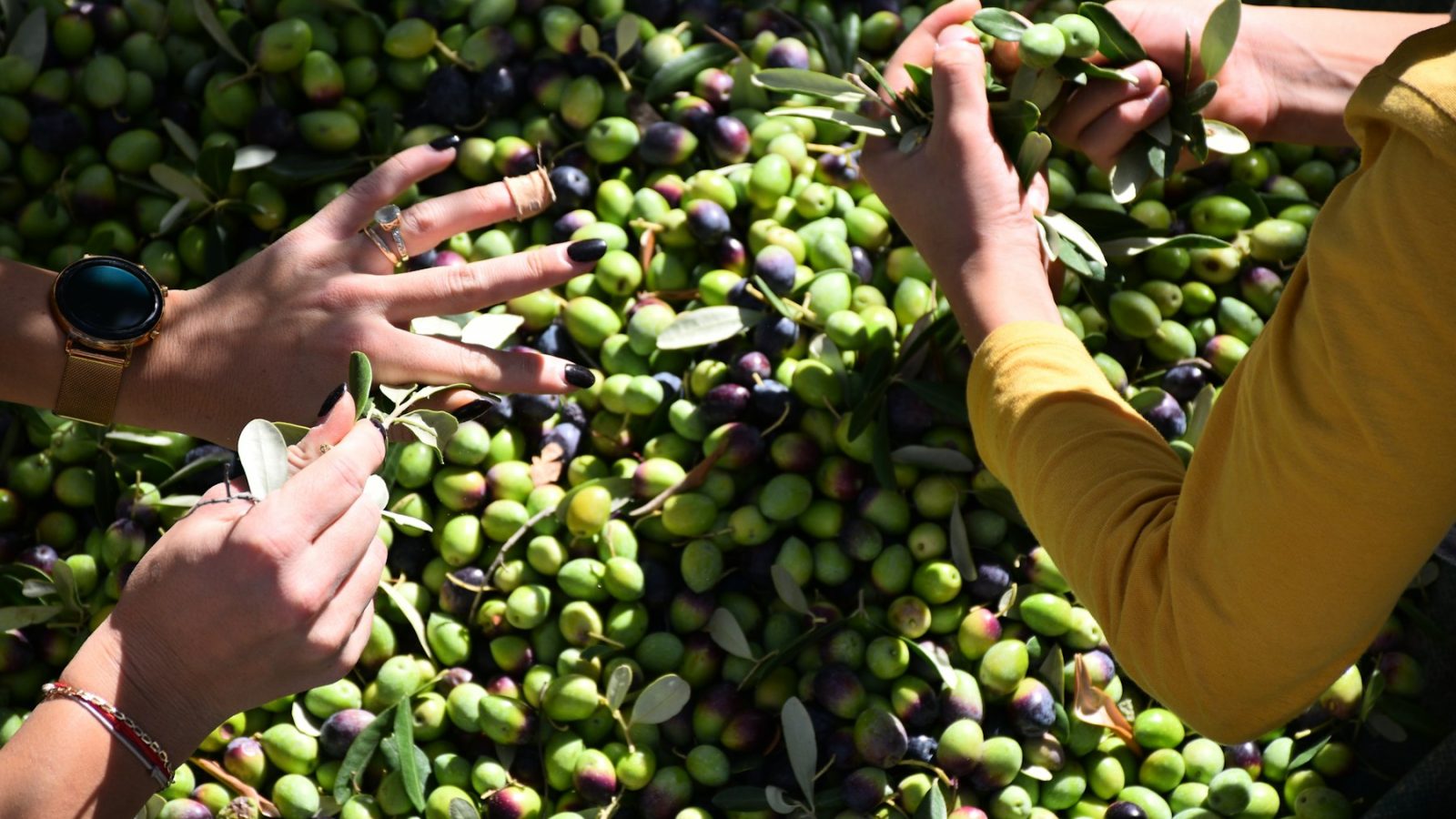
Olives change colour as they ripen, from green to violet and finally black. Picking earlier gives oil with grassy, bitter and peppery notes and higher levels of natural phenolic compounds, but less oil per kilogram of fruit. Later harvests give rounder, milder oils and higher yields.
2. Picking and transport
Pickers harvest olives by hand, with hand-held rakes or with mechanical shakers, onto nets spread under the trees. They should travel in ventilated crates rather than sacks, so the fruit is not crushed and does not overheat.
3. Washing and crushing
At the mill, workers remove the leaves and wash the olives. They are then crushed — traditionally with stone mills, today usually with metal crushers — into a paste.
4. Malaxation
Next, the mill slowly mixes the paste so that tiny oil droplets join together. In addition, millers control time and temperature here: under EU rules, oil labelled as “cold extracted” must be obtained below 27 °C.
5. Separation
A horizontal centrifuge (decanter) separates oil from water and solids. A second, vertical centrifuge cleans the oil further. Producers then filter some oils; they leave others unfiltered and let them settle.
6. Storage and bottling
Finally, producers store the new oil in stainless steel tanks, protected from light, heat and air, and bottled as needed. Quality tests and labelling complete the process.
Frequently asked questions
Why is fresh olive oil sometimes bitter or peppery?
Bitterness and a peppery sensation in the throat come from natural phenolic compounds, which are more abundant in early-harvest oils.
How quickly should olives be pressed?
As soon as possible — ideally within hours of picking. Waiting causes fermentation and oxidation that can lead to defects.
What is the difference between filtered and unfiltered oil?
Unfiltered oil contains fine particles and may look cloudy. Filtering removes them and can help the oil stay stable for longer.
Helenida brings natural olive oil from the fertile lands of the North Aegean. Discover Helenida.