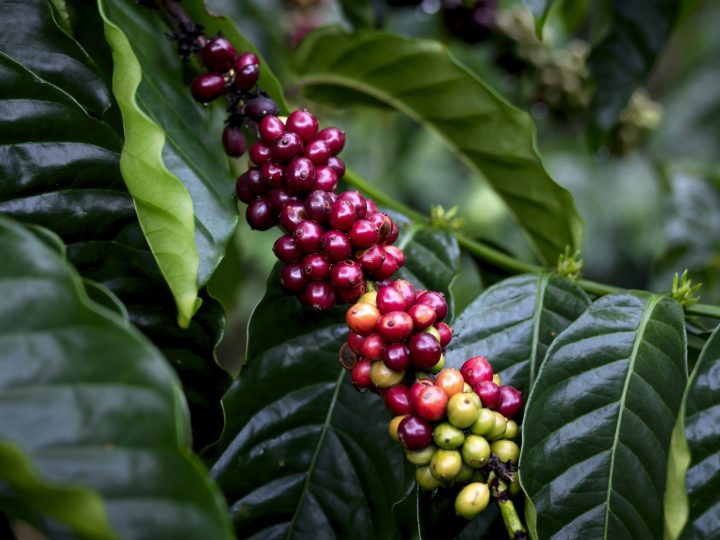
A coffee bean is the seed of a fruit — the coffee cherry. Before it can be roasted, the fruit must be removed and the seed dried. How that is done, known as processing, has a strong effect on the flavour of the final cup.
Key takeaways
- Natural (dry) processing dries the whole cherry: fruity, sweet, heavier body.
- Washed (wet) processing removes the fruit before drying: clean, bright, clear acidity.
- Honey processing sits in between, leaving some fruit on the bean.
- The method is usually stated on specialty coffee labels.
Natural (dry) process
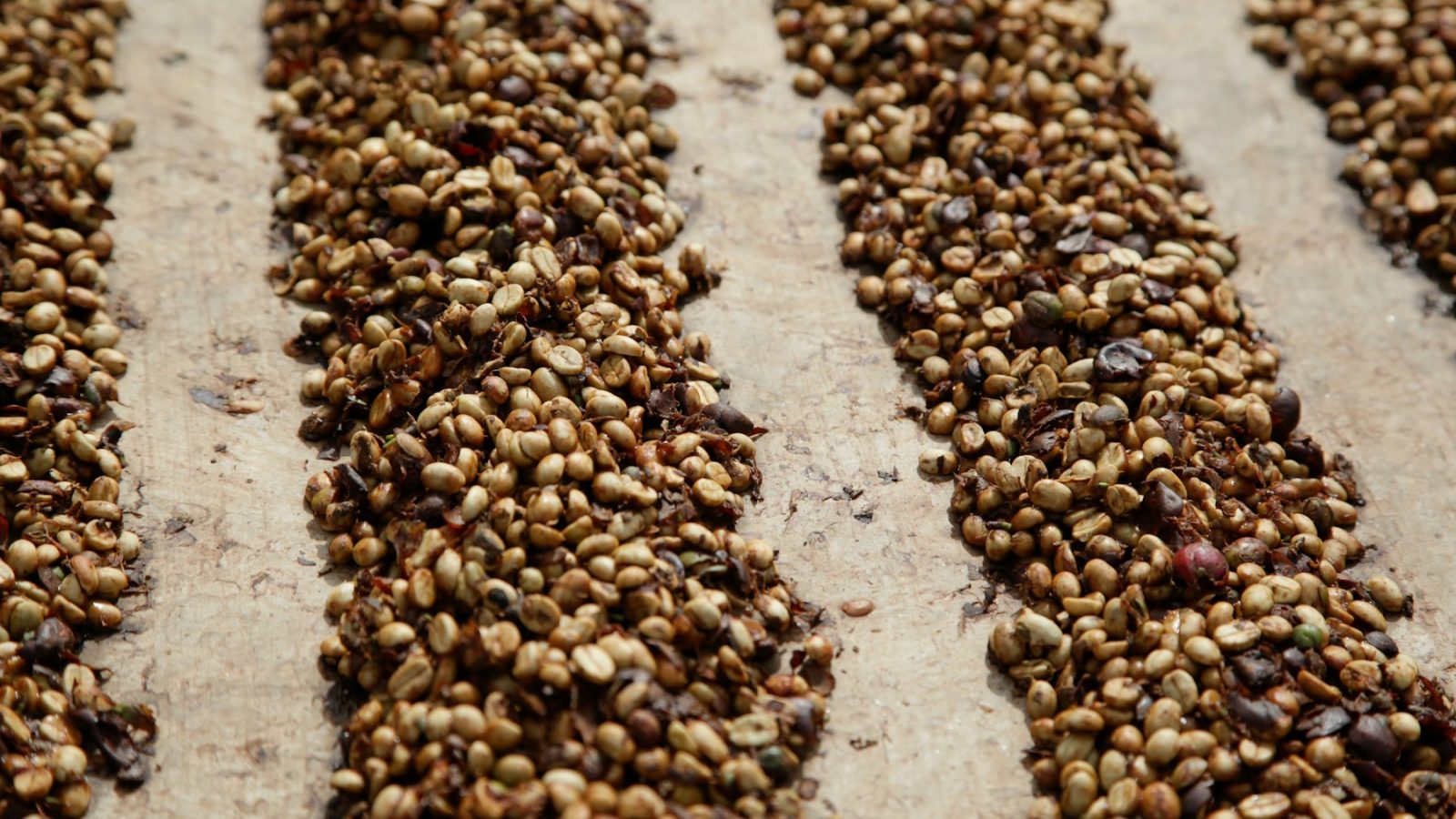
The oldest method. Whole cherries are spread out to dry in the sun on patios or raised beds and turned regularly for several weeks. The bean absorbs sugars and flavours from the fruit, which often gives fruity, wine-like notes and a full body. Careful drying is essential to avoid defects.
Washed (wet) process
The skin and pulp are removed mechanically, then the beans are left to ferment so the sticky mucilage loosens before it is washed off. The clean beans are then dried. Washed coffees typically taste cleaner and brighter, with clearly defined acidity that lets the origin speak.
Honey (pulped natural) process
The skin is removed, but some or all of the sticky mucilage is left on the bean while it dries. The result is often sweet with a rounder body — a balance between natural and washed styles.
Why it matters for you
If you enjoy fruity, intense coffees, try naturals. If you prefer clean, crisp cups, look for washed coffees. Processing is one of the easiest ways to explore different flavours from the same region.
Frequently asked questions
Does processing affect caffeine?
Not significantly. Processing mainly affects flavour, body and acidity.
Why is honey processing called “honey”?
The name refers to the sticky, honey-like mucilage left on the bean during drying — no honey is added.
Which method is used most for Uganda Arabica?
Ugandan Arabica such as Bugisu is commonly washed, while natural-processed Arabica is also produced and traded under the name “Drugar”.
Explore Saint Darker’s Uganda single origins and blends. Discover Saint Darker.